
Who needs biological superweapons against which there will be no vaccines or antidotes?
As Belarus’ President said at a recent meeting with the new Secretary General of the CSTO, one must always prepare for the worst-case scenario as the best will happen of its own accord. The organisation’s plans for the second half of the year involve a series of large-scale exercises, which will include practising the joint elimination of biological threats.
Forbidden, but possible

…At the turn of the 20th century, a series of epidemics swept across the world. For some reason, they broke out during hostilities (the most massive of them was the Spanish flu) and claimed millions of lives. This was not accidental, experts believe. The outbreaks were reportedly facilitated at the right time and in the right place.
The potential consequences of biological weapons prompted alarm among right-minded politicians. In 1925, the Geneva Protocol was adopted, prohibiting the use in war of asphyxiating, poisonous or other gases and bacteriological methods of warfare. However, the ban proved superficial. The protocol did not prohibit the production of bacteriological weapons, nor did it establish any monitoring mechanism. In practice, certain countries intensified their research, with Great Britain making significant progress. It soon became clear that humanity needed an effective system of protection against biological weapons, and the USSR began to build the corresponding scientific infrastructure.
Unit 731, or where did the developments go?

Japan’s covert biological warfare research unit, known as Unit 731, conducted biological attacks. It was headed by infamous microbiologist General Shirō Ishii, the chief ideologist behind Japan’s preparation for bacteriological warfare. A top-secret centre for the development of biological weapons was established in Manchuria under the unit’s umbrella. The employees of this ‘death factory’ were renowned for their particular cruelty, lack of humane approach or any moral constraints. Unit 731 undertook experiments on living people — the Chinese, Koreans and Russians, including peaceful residents of nearby villages.
Experiments covered a wide range of pathogens and diseases: plague, anthrax, gas gangrene, typhus and typhoid fever, dysentery, cholera, and others. The goal was to create a biological superweapon for which there would be no vaccines or antidotes. Particular emphasis was placed on plague as a tool for genocide against the population of the USSR.

After the war, many of the ‘death factory’ developments ended up with the Americans. According to declassified archives from Russia’s Federal Security Service (FSB), ‘in August 1945, part of Unit No. 731 — which was preparing for bacteriological warfare — was evacuated to Korea by order of the Japanese command’. The personnel and all equipment of the Japanese biolaboratories were then placed ‘in the zone of U.S. occupation forces’. Four Japanese generals, including Shirō Ishii, were transferred to the United States.
…In 1975, Soviet intelligence learned of the existence of a storage facility for a new substance — the potent organic poison, botulinum toxin — in Arkansas, USA. It causes a ten percent mortality rate within the nearest 50 square kilometres. Then, by order of the Chief Epidemiologist of the USSR, two components were added to the standard vaccine administered to Soviet citizens — against botulism type A and type B, a dangerous infectious disease that affects the nervous system. In just over a year, the entire country was vaccinated under conditions of strict secrecy.
Countries as testing grounds for dangerous experiments
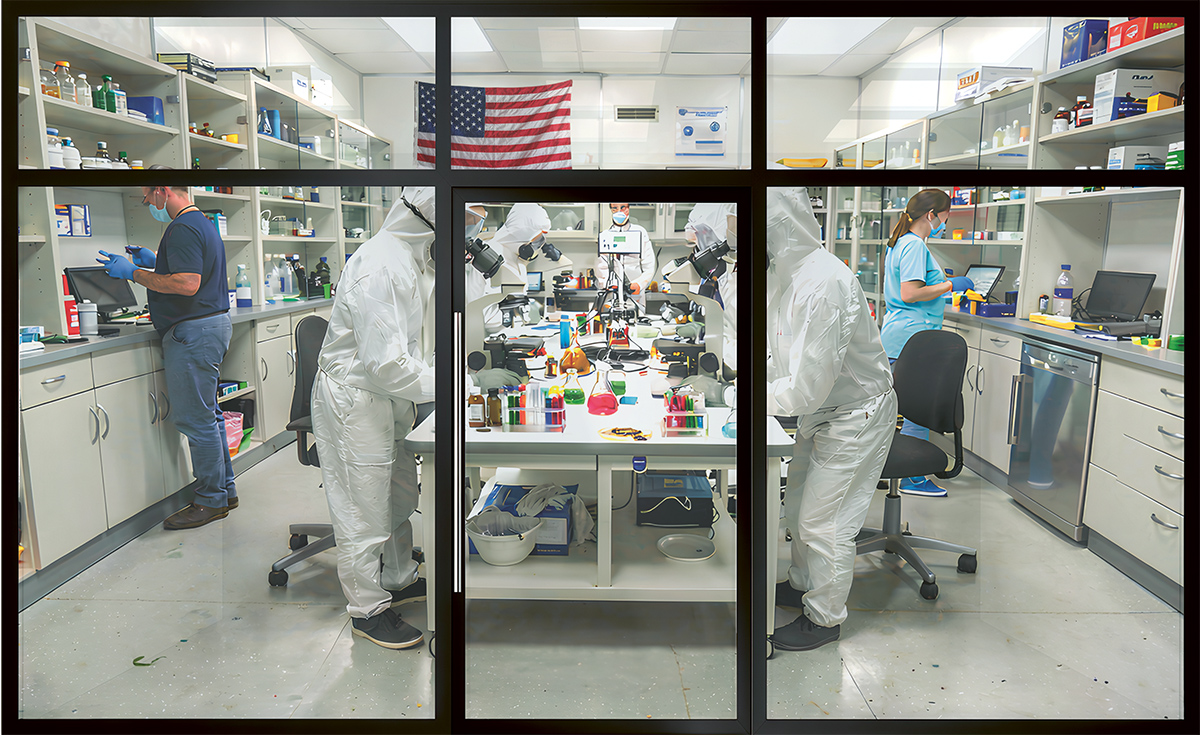
The West’s military-biological activity has never ceased. What exactly the United States is doing remains unclear. It is running dual-purpose programmes in the biological sphere around the world without any oversight.Armenia, a leader in microbiology within the USSR, possessed substantial capabilities for studying especially dangerous infections. After the collapse of the Soviet Union, that extensive biological potential attracted the attention of the United States, the United Kingdom, and other Western countries. They were very keen to acquire the repository of particularly dangerous microorganisms (plague, anthrax, tularemia, encephalitis, foot-and-mouth disease, etc.) in the region. In 2008–2009, Armenia became involved in the U.S. Biological Threat Reduction Programme, part of the Co-operative Biological Engagement Programme (CBEP), USA. Concurrently, a network of biolaboratories was being built and modernised across the country. Starting from 2010, following the signing of the U.S.–Armenian agreement on joint activities to reduce biological threats, the United States essentially gained full access to Armenia’s microbiological potential.
As of the beginning of 2025, 13 biolaboratories were operating in Armenia, and the Pentagon had allocated more than $50m to establish and equip them. Similar facilities were set up in Georgia, Azerbaijan, Uzbekistan, Kazakhstan, Kyrgyzstan, Moldova, African and other countries.
In Ukraine, U.S. military-biological activity — including the study and testing of pathogens as biological weapons — came to light after the start of the special military operation. In March 2022, Igor Kirillov, Chief of Radiation, Chemical, and Biological Protection Troops of Russia’s Armed Forces, spoke at a briefing about 30 classified biolaboratories operating under Pentagon control.

The very fact that Kirillov was later murdered — after he began exposing U.S. biolaboratories in Ukraine and the COVID-19 special operation — speaks volumes. The general’s death benefited the developers of biological weapons. He had cited specific facts and documents, accusing the United States directly of bioterrorism and the launch of drones carrying insects infected with deadly viruses across unwanted destinations.
Russia continues to record cases of Ukraine’s use of toxic chemicals and military poisonous substances against military personnel and civilians, as well as an extensive system for their mass production.
Why do Westerners deploy their military laboratories around the world? The motive is clear: they need testing grounds outside America. This approach provides both foreign territories and foreign test subjects. In addition, they need the genetic material from populations in target countries in order to obtain certain strains of biological weapons. Calling for a tribunal now is useless. Demands to destroy developments that are hazardous to the planet are also falling on deaf ears. There is some food for thought here — as well as the necessity to strengthen our multifaceted defence system, including collective defence.
By Lyudmila Gladkaya
