
The main principles for state-funded IVF should be liberal treatment for women and the use of advanced technologies, Belarus’ President Aleksandr Lukashenko said as he heard a report on the draft decree On In Vitro Fertilisation
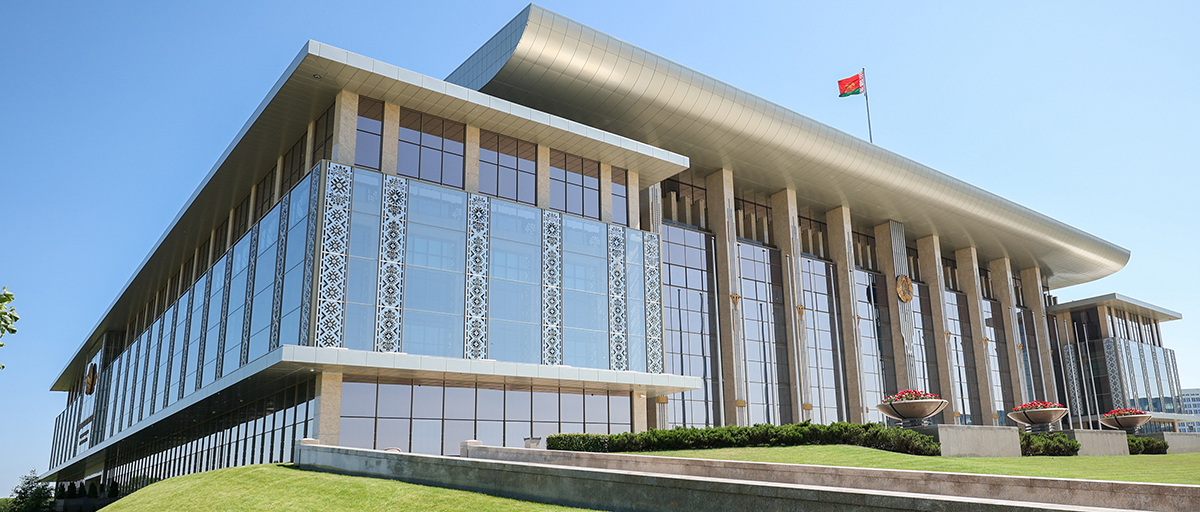
Attending the meeting on March 20th with the Head of State were Deputy Prime Minister Natalya Petkevich, First Deputy Head of the Belarus President Administration Vladimir Pertsov, Healthcare Minister Aleksandr Khodzhayev, and Labour and Social Security Minister Andrei Lobovich.
Belarus has a programme in place that provides one free attempt at IVF at the state’s expense, thanks to which 2,528 babies have been born over the past four years. As was reported to the President, this procedure is becoming increasingly sought after.
Addressing the participants of the meeting, the Head of State firmly emphasised that children are sacred,
“You know my attitude towards children. Therefore, as President, and you as my subordinates, we must do everything (not only during the Year of the Woman) to make women happy. What happiness does a woman have if she has no children? Children are the happiness of our women. We must do everything so that they can give birth. This is the main thing — both for the Year of the Woman and beyond, throughout their life. So let’s proceed from this.”“The state has taken on certain responsibilities in this regard. I think it would be better if men took on some responsibility themselves,” Aleksandr Lukashenko remarked, indicating that the issue of IVF and the need for it is closely linked not only to women’s health but also to men’s health. “Women say that the topic of our discussion is extraordinary and significant. It probably is extraordinary. It probably is significant. But it is hard to imagine such a disgrace for men,” the Head of State said, framing the issue. “A woman cannot give birth, there is no one to father a child. We have already started coming up with certain artificial methods, let’s call them that, of in vitro fertilisation.”
“Essentially, IVF is one of the measures aimed at improving the demographic situation. That is not the most important thing, though. The most important thing is that a woman wants to have a child, thank God,” said Aleksandr Lukashenko.
The President recalled that the Healthcare Minister had reported on the relevant topic in October 2025.
“A decision was made to approach this issue as liberally as possible and in the interests of those who wish to have children.So that there are no bureaucratic quirks, like ‘this is allowed, this is not, these are moral and ethical principles’, or whatever else,” the Head of State said.A corresponding draft decree was prepared and submitted for the President’s consideration. As was reported to the Head of State, certain proposed approaches ‘drew mixed reactions from specialists’. This concerned primarily the moral and ethical aspects of performing the procedure. “What kind of specialists are they? How many children have they given birth to, if they are women? As for the men, how hard did they try to help the woman give birth?” Aleksandr Lukashenko asked. “What moral and ethical principles are we talking about? Who do they come from? A woman wants to have a child. That makes her a saint for me. If we cannot do it the natural way (and I am speaking broadly about men) then we must do everything we can to help,” the President emphasised.
During the report, the issue of additional funding for performing these procedures was also addressed, with the estimated cost amounting to approximately six million Belarusian roubles. Aleksandr Lukashenko emphasised that allocating this amount is a manageable matter. Moreover, this could be done without placing an additional burden on the budget, by allocating funds from the Presidential funds. “This I will give to the women. I will gather this money and give it to them. Can we not find six million Belarusian roubles to make a woman happy?” the Head of State asked rhetorically. “Tell me how much money is needed. Again, not from the budget. We will find the money.”
SECOND FREE IVF ATTEMPT IN BELARUS
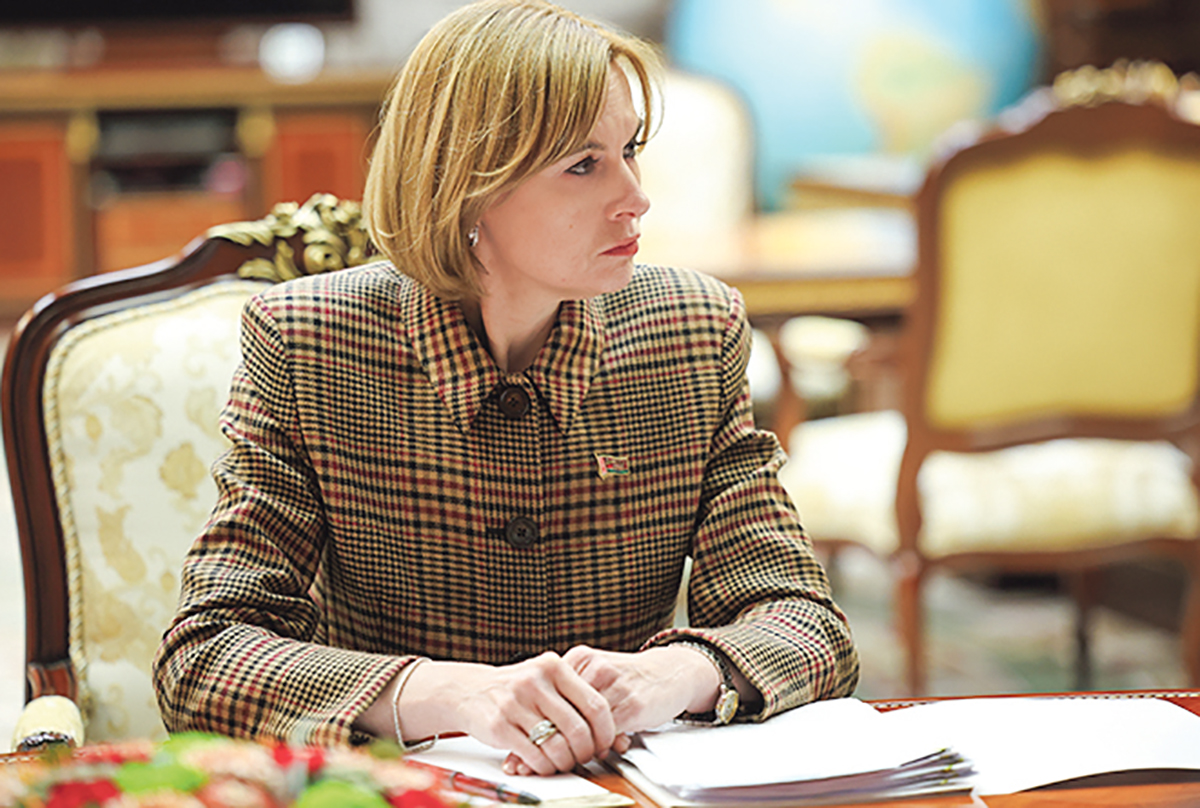 Natalya Petkevich
The Deputy Prime Minister noted that several months ago, the Belarusian leader gave instructions to revisit the topic of in vitro fertilisation (IVF). “Of course, we would like everything to happen naturally, but that is not always possible. The Head of State’s initiative was to make the approach even more liberal and to provide women with broader access to the IVF procedure,” Natalya Petkevich said.
Furthermore, the principle remains that a free IVF attempt will only be carried out in state medical institutions. The Deputy Prime Minister noted that the list of organisations providing IVF procedures does include private medical facilities. However, statistics show that the effectiveness of in vitro fertilisation is significantly higher in state healthcare institutions. “If the state takes upon itself the obligation to give women the opportunity to undergo IVF, then it must ensure that the procedure is carried out as effectively as possible and at a high level, with guaranteed protection of the health of both mother and child,” Natalya Petkevich emphasised.
Statistics on the effectiveness of the IVF procedure in state medical institutions were provided to journalists by Healthcare Minister Aleksandr Khodzhayev
According to him, this indicator reaches 38 percent. At the same time, the Healthcare Minister noted that this figure was not achieved immediately. “When we started IVF practice, this figure was around 30 percent. Then methods were refined, and over the past year, which we promptly analysed, the effectiveness rate stood at 38 percent. This is slightly above global figures,” Aleksandr Khodzhayev said.
He added that during preparation for the IVF procedure, specialists work individually with each woman, “It is very important that all the processes we carry out do no harm. It is important to talk with each woman, to give her hope, if we have the opportunity to perform this procedure.”

FINAL DECISION
President of Belarus Aleksandr Lukashenko signed Decree No. 100 On In Vitro Fertilisation Treatment on March 23rdThe document aims to advance the existing state programme for IVF treatment support. It provides for greater access to assisted reproductive technologies for women who hope to become mothers. Thanks to the existing IVF initiative, 2,528 children have been born in Belarus, proving it effective and relevant. The state has allocated approximately 28m Belarusian roubles to this programme.
The decree stipulates two free IVF treatments instead of one, which are available to both married women and those who are not. Several conditions must be satisfied to qualify for two treatments, including the age of the woman not exceeding 40 years, as well as medical evidence that there are no medical contraindications to the procedure.
If the first attempt at IVF provided free of charge is successful and the pregnancy leads to the birth of a child, the woman is entitled to a second IVF procedure funded by the state until she reaches the age of 49.
As before, the IVF treatment procedure is carried out in state healthcare facilities as determined by the Council of Ministers. The main clauses of the decree come into effect three months from the date of its official publication.
This document is expected to improve public social support for Belarusian women, providing them with greater opportunities for reproductive health care.
Based on materials of sb.by and belta.by
