
Irina, mother of Paralympic Games winner and silver medallist Raman Svirydzenka, discusses her son’s childhood and his journey in sport
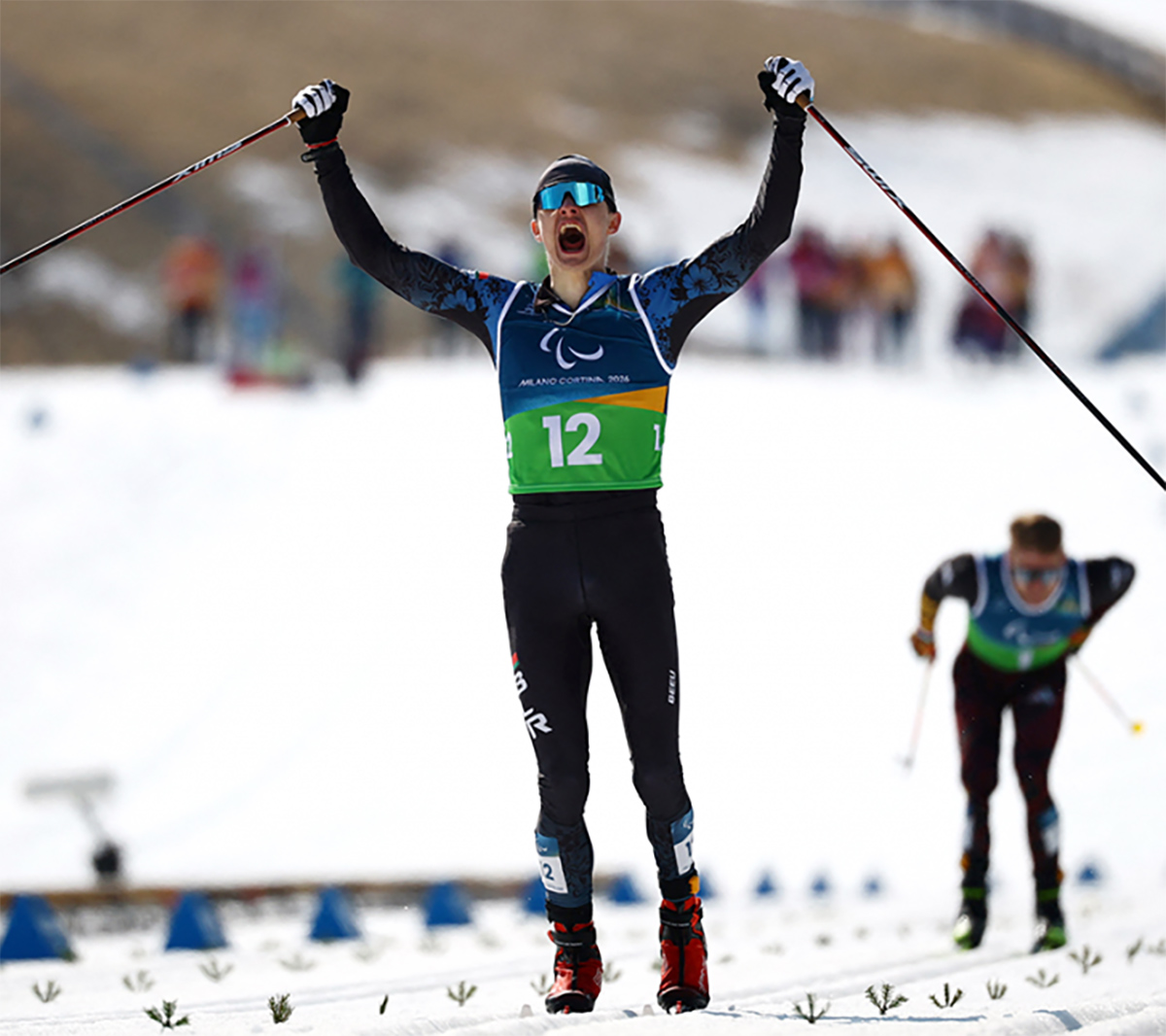

Raman Svirydzenka
 Raman Svirydzenka's mother Irina
“Talipes equinovarus, a left-sided congenital clubfoot, that is Raman’s diagnosis,” explains Irina. “He was born with a foot turned inwards and the muscles in his lower leg had not developed. When we were discharged from the maternity hospital, my son was in plaster. He weighed 4–4.5kg, but almost half of that weight was the plaster cast. There were other problems too. He did not eat well, I was crying — my milk dried up… If only someone had said to me 21 years ago: ‘Don’t cry, Mum, it will all be alright’…”

— Despite his diagnosis, he was active. He had his first surgery at seven months old. Then there was a second and a third. Before he started primary school, he had another surgery and after that, he was in plaster again. That did not stop us from going to the lake to swim — we would wrap his leg in cellophane, of course. Over time, he got so used to it that he went out into the yard to play football on crutches! Like all boys, Raman was energetic, cheerful and sociable. I hardly had any problems with him. He did well at school and was top of his class until fifth grade.
— How did Raman get into cross-country skiing?
— Raman was in year two at the time. Next to us was the DYuSSh [Children and Youth Sports School] No. 2 for cross-country skiing, where well-known coach Boris Vorobyov works, who turned 90 this year. We took Raman to him, and I was afraid he would not take him: after all, not every coach is ready to take responsibility for a physically challenged child. Yet, Boris Vorobyov immediately said: ‘What physically challenged? He is healthy!’ And he added that we would see Raman at the Paralympic Games. At that moment, I did not even know that there were Paralympic sports at all, although I had always watched the Olympics since childhood.

— Did he succeed immediately?
— No, not immediately. I think he won his first medal, a silver, at the city competitions in 2014. Initially, we did not even think or dream of any great heights in sports. After ninth grade, Raman wanted to transfer to coach Olga Pronicheva. Seeing how she conducted her training sessions, Raman was eager to join her group. He pestered me all day to call her and arrange it! This, by the way, is a striking feature of his character: if he wants something, he will get it. As a result, he moved to another sports school in tenth grade. Then he took second place in an athletics cross-country race among able-bodied children. After that, everything took off. The coach spoke with Sviatlana Sakhanenka [three-time champion and bronze medallist of the Paralympic Games, who, after her marriage, competed under the surname Matoryna], who contacted personal trainer Inna Kozlova, now the head coach of Belarus’ national cross-country skiing team. Literally after two–three months, Raman started going to training camps, Sviatlana took him to Raubichi in the summer to train together. A year later, my son flew to the Paralympic Games in Beijing. He was only 17 years old.
— Alas, none of our athletes were able to compete at the Games that year: they were suspended from the competition. Did your son find this moment difficult to cope with?
— Things were difficult all around. It was 2022, and there were many restrictions due to coronavirus. Thus, they would not let you into China without two vaccinations. We had one, but we did not physically have time for the second. Our Paralympic Committee contacted the Games’ Organising Committee, and the day before departure, we received a response stating that a minor athlete could travel with just one jab. In short, there were a lot of difficulties. Because of coronavirus, there were many nuances to consider. When the ban became known, it was a tragedy for Sviatlana, for Lidziya Loban and for Valiantsina Shyts [after marriage — Biryla]. Raman was very upset too. He had not had that many international competitions before then — European Cup stages, the world championship — and perhaps he had not fully experienced it all. About a year or two before the current Paralympics, he began to wonder why such suspensions had befallen him in his sporting career. I always waited with bated breath to hear what he would say next. And he would say: ‘I still won’t give up sport!’.

— And he did not give up.
— What is more, he did not miss a single training camp in those four years. He always trained. My husband has a house near Braslav. It is 15 kilometres from the town along a dirt road. We would drive to the town, and Raman would ask: ‘Drop me off here’. Then he would run while we drove. Sometimes, he and his friends get together — sauna, barbecues. But in the morning, he still goes for a run.
— When the news broke about the return of our athletes, did his motivation increase?
— It is like he grew wings! There were concerns, though. After all, he had not competed internationally for so many years, and it was impossible to assess how strong the opponents were. When he came fourth in the 10km race at the World Cup stage in Finsterau in January, we were happy. Then Raman took silver in the mass start, only three seconds behind the Chinese athlete, and began to think that gold was close. He won it the next day in the sprint.
— Have you thought about how you will welcome your son back home?
— Of course, I want to meet him personally at the airport. At home, I will cook dumplings, Olivier salad and dressed herring salad — everything he likes.
By Tatiana Pastushenko
