
A herbarium collection and new laboratories: a look inside the research centre for evidence-based phytopharmacy
The research centre for evidence-based phytopharmacy has recently opened at the Belarusian State Medical University. The milestone event was timed to coincide with the 15th anniversary of the Faculty of Pharmacy, whose staff are actively engaged in research while also training highly qualified specialists for the pharmaceutical industry.
 Yuliya Tretyakova, Deputy Dean for Ideological and Educational Work of the Faculty of Pharmacy

Researching the flora
“The opening of the centre is the result of many years of work studying the medicinal plants of Belarus,” noted Natalya Gurina, Dean of the Faculty of Pharmacy at the Belarusian State Medical University (BSMU). “We have studied the chemical composition of plants, their toxicity and safety, the absence or presence of side effects, their use in children and in the elderly, and, of course, their pharmacological activity in treating various diseases.”Medicinal plants serve as sources of readily available raw material for the production of medicines, including those intended for import substitution.
“Today, up to 40 percent of the medicines and biologically active substances stocked by any pharmacy are made from medicinal plant raw materials,” our interviewee shared a striking fact. “That is a considerable share, yet the proportion of plant-based medicines made from domestic raw material stands at no more than 15 percent. At the same time, Belarus’ flora and its natural and climatic conditions make it possible both to harvest wild-growing raw material and to cultivate plants under plantation conditions. This is a promising niche for scientific research and the development of herbal medicines.”
The foundation for the centre’s opening was the botanical garden in the village of Novoye Pole, which is owned by BSMU. Covering an area of 25 hectares, it includes natural plant communities typical of the Belarusian flora. The botanical garden is a treasury of more than 250 species of medicinal plants, which are used in the teaching process at all the relevant departments of the Faculty of Pharmacy.
In addition, experimental plantations have been established here to study the agronomic techniques for cultivating new species of medicinal plants.
Building valuable skills
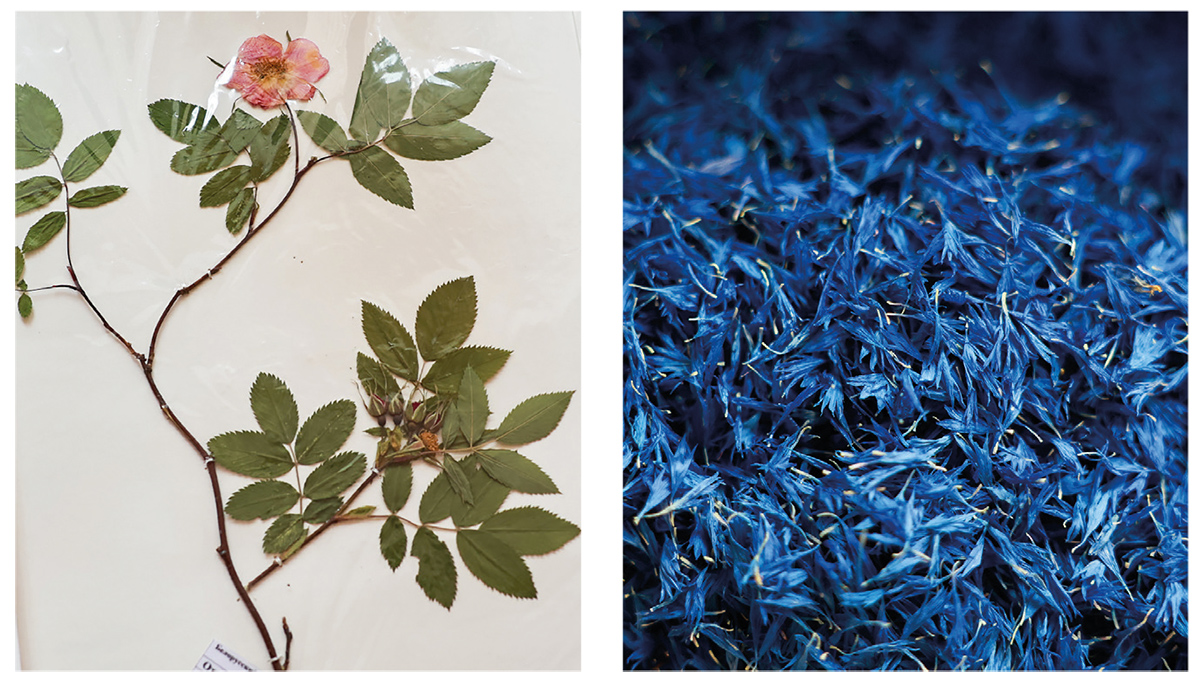
The research centre for evidence-based phytopharmacy is first and foremost of didactic value. The research and practical facility includes an extensive herbarium collection, which serves as a visual aid in preparing students for classes, as well as for tests and examinations.Beyond this, the centre plays an important role in fostering in students a love of their native nature, an ecological culture and a commitment to environmental protection.
 Anastasiya Kupriyanchik, third-year student of the Faculty of Pharmacy
The centre comprises three specialised laboratories. They are intended both for research and for teaching. In the specialised laboratory of pharmaceutical botany, future pharmacists study the fundamentals of macro- and microscopic methods for analysing medicinal plant raw materials, as well as plant systematics in accordance with the requirements of the State Pharmacopoeia. The pharmacognosy laboratory is designed for studying the chemical composition of medicinal plants, methods for extracting biologically active compounds and the parameters of plant raw materials.
Third-year student of the Faculty of Pharmacy Anastasiya Kupriyanchik has been attending classes in the pharmacognosy laboratory for quite a while.
“Right now we are studying various preparations containing medicinal plants and how they are used in pharmacies,” she explained. “Among them are coltsfoot and plantain leaves.”
The skills acquired through work in the specialised laboratories will prove valuable. As Olga Mushkina, Head of the Pharmacy Organisation Department, noted, students engage with the basics of drug development and the search for new medicinal plants that could help broaden their range; they learn to advise pharmacy customers on the use of herbal medicines and on preparing aqueous extracts at home and the specifics of storing them.
The experience gained at the research centre for evidence-based phytopharmacy will therefore be valuable for Anastasiya Kupriyanchik too. After all, in the future the student would like to become a pharmacist and help pharmacy customers choose the right medicine.
By Ivan Valuyev
